By : Sourov
There are moments in history when politics becomes larger than political parties, larger than elections, and even larger than governments themselves. Such moments become emotional landmarks in the life of a nation. In Bangladesh, many supporters of Sheikh Hasina believe another such moment may be approaching — a return that could once again reshape the country’s political atmosphere and emotionally unite millions of people across generations.
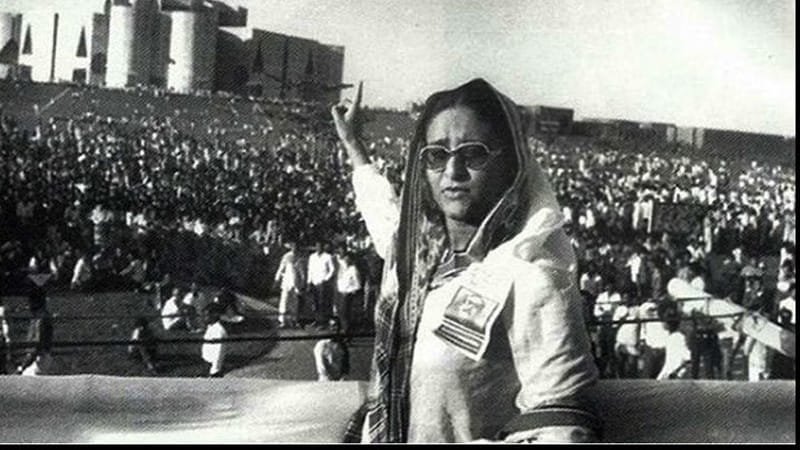
When Sheikh Hasina returned to Bangladesh on May 17, 1981, the country was politically wounded, uncertain, and deeply divided. The daughter of Sheikh Mujibur Rahman returned after years of exile carrying not only personal grief, but also the expectations of a political movement struggling to survive. Back then, her arrival symbolized resistance, continuity, and hope for many supporters of the Bangladesh Awami League.
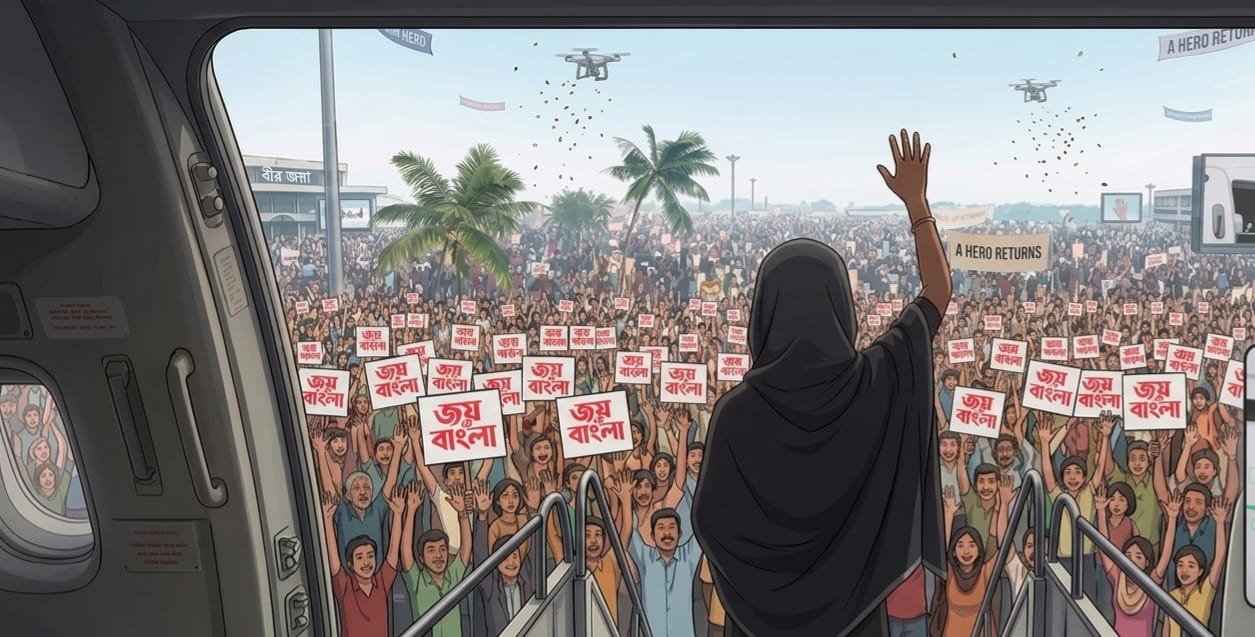
Today, conversations surrounding a possible new return carry a very different emotion. Supporters describe it not merely as a political comeback, but as a “second historic homecoming” — one that they believe could bring millions of people onto the streets of Dhaka. From villages, districts, universities, factories, and business communities, many of her followers claim they are waiting for the moment when she once again steps onto Bangladeshi soil.
Political observers often compare 1981 with the present day, but the Bangladesh of today is not the Bangladesh of the early 1980s. The difference is dramatic.
In 1981, Bangladesh was still struggling with instability, poverty, weak infrastructure, and a fragile economy. Dhaka was a much smaller city, opportunities were limited, and the country’s global standing remained uncertain. The nation was searching for direction.
Supporters of Sheikh Hasina argue that under her leadership, Bangladesh transformed itself into one of South Asia’s fastest-growing economies. Mega infrastructure projects changed the national landscape. The Padma Bridge became more than a bridge — it became a symbol of national confidence and self-financing capability. The modernization of highways, expansion of electricity coverage, growth of digital services, and development of metro rail transformed urban life in ways unimaginable decades ago.

Many citizens also point to improvements in women’s empowerment, garment exports, access to education, healthcare expansion, and Bangladesh’s growing international influence. The country that was once associated primarily with floods and aid dependency began presenting itself as a rising economic power with ambitious development goals.
For supporters, these achievements are directly connected to Sheikh Hasina’s political era. They believe her leadership provided continuity, administrative discipline, and long-term planning that accelerated Bangladesh’s transformation.
Another issue often raised by her followers is law and order. Many citizens who support her argue that during her tenure, the state machinery functioned with stronger control, political violence was more contained, and extremist threats were aggressively suppressed. Business communities, investors, and sections of the middle class frequently associated stability with economic growth.
This is why discussions surrounding her possible return are emotional for many people. To them, it is not only about politics; it is about familiarity, stability, and the memory of a Bangladesh that they believe was moving forward rapidly.
Recently, Sheikh Hasina herself hinted in a public statement that she hopes to return to the country within months. That single message reignited conversations across social media, political circles, and ordinary communities. Supporters immediately began imagining scenes similar to — but potentially even larger than — her historic 1981 return.
Many believe Dhaka could witness one of the largest political gatherings in modern Bangladeshi history if such a return takes place. Some describe a city brought to a standstill, highways filled with convoys from every district, and millions of emotional supporters gathering simply to witness a historic moment. Whether that prediction becomes reality or not, one thing is undeniable: her political presence still carries enormous emotional weight among a significant section of Bangladeshis.
Critics and opponents may view the situation differently, as every major political figure naturally remains debated in a democratic society. Yet even critics often acknowledge Sheikh Hasina’s undeniable impact on Bangladesh’s modern political and developmental history. Few leaders in the country’s history have shaped the national narrative as deeply or as continuously as she has.
History often moves in circles. In 1981, a daughter returned to revive a political force struggling to survive. Today, supporters imagine another return — this time not to introduce herself to the nation, but to reconnect with a country transformed during her years in power.
Whether viewed politically, emotionally, or historically, the anticipation surrounding Sheikh Hasina’s possible homecoming has already become a conversation far bigger than routine politics. For her supporters, it represents unfinished continuity, emotional attachment, and the hope of stability returning once again.
And if that day truly arrives, Bangladesh may witness not just the return of a political leader, but the return of a moment capable of stopping an entire nation in its tracks.