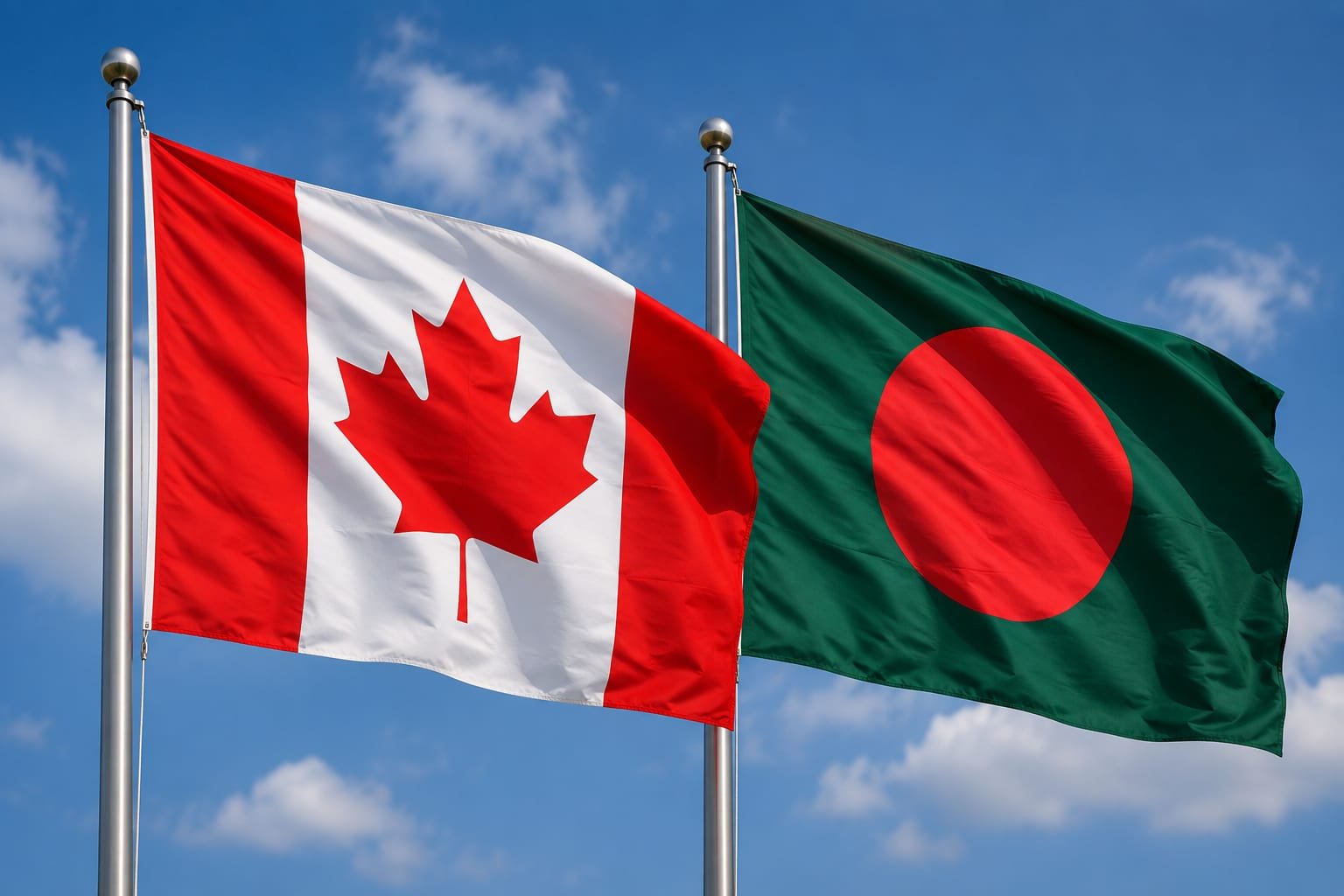
In a significant diplomatic development, the Canadian High Commission in Dhaka has officially expanded its operational activities, signaling a stronger and more strategic partnership between Bangladesh and Canada. The move is being viewed by diplomats, policy analysts, and international observers as a positive step toward deepening bilateral cooperation in trade, education, immigration, investment, and regional diplomacy.
According to officials connected with the mission, the newly expanded operations are expected to enhance visa processing efficiency, improve consular support for Bangladeshi citizens, and strengthen communication channels between the two governments. The initiative also reflects Canada’s increasing interest in South Asia, particularly Bangladesh, which has emerged as one of the fastest-growing economies in the region.
Diplomatic analysts believe the expansion comes at a time when Bangladesh is gaining international attention for its economic resilience, infrastructure growth, and expanding global workforce. Canada, on the other hand, continues to seek stronger partnerships in the Indo-Pacific region, focusing on economic collaboration, skilled migration, sustainable development, and educational exchange.
Sources familiar with the matter indicate that the upgraded operational activities may include enhanced immigration services, additional diplomatic staffing, cultural outreach programs, and stronger trade facilitation mechanisms. While officials have not publicly disclosed every detail, insiders suggest that several new bilateral initiatives are currently under discussion between Dhaka and Ottawa.
The development is particularly important for Bangladeshi students and skilled workers seeking opportunities in Canada. Over the last few years, Canada has become one of the most attractive destinations for Bangladeshi students due to its quality education system, immigration pathways, and employment opportunities. With the expansion of High Commission activities, many applicants hope visa processing times and communication efficiency may improve in the future.
Business communities in both countries have also welcomed the move. Economists note that bilateral trade between Bangladesh and Canada has steadily increased, especially in sectors such as garments, agriculture, information technology, and clean energy. Canadian investors have shown growing interest in Bangladesh’s infrastructure projects, renewable energy sector, and digital economy.
Experts also point out that Bangladesh’s strategic geographic position and growing manufacturing capabilities make it an increasingly valuable economic partner for Western nations. Canada’s expanded diplomatic presence may therefore contribute to broader commercial engagement and long-term investment planning.
From a geopolitical perspective, the move aligns with Canada’s broader Indo-Pacific strategy, which aims to increase engagement with emerging Asian economies. Bangladesh, with its population of more than 170 million people and rapidly developing economy, is considered a crucial partner in maintaining regional economic stability and connectivity.
Social and cultural ties between the two countries are also expected to strengthen further. Thousands of Bangladeshi-origin residents currently live in Canada and contribute actively in business, healthcare, education, engineering, and public services. Diplomats say stronger institutional cooperation could help promote cultural exchange, tourism, academic partnerships, and diaspora engagement.
Meanwhile, policy experts believe the expansion reflects international confidence in Bangladesh’s economic future and diplomatic relevance. They argue that increased activity by foreign missions often signals long-term strategic interest rather than short-term administrative adjustments.
Although no major political announcement accompanied the operational expansion, observers suggest the timing is important. Bangladesh is currently navigating a rapidly evolving international environment where global powers are competing to strengthen ties across South Asia. Canada’s growing engagement may therefore carry both economic and diplomatic significance.
Officials from both countries are expected to continue discussions on trade cooperation, development partnerships, climate resilience, education, migration management, and technology exchange in the coming months. Analysts say the success of these efforts could open a new chapter in Bangladesh–Canada relations.
For ordinary citizens, however, the message is straightforward: the relationship between Bangladesh and Canada is becoming stronger, broader, and increasingly future-oriented. Whether in education, migration, investment, or diplomacy, the expansion of the Canadian High Commission’s activities in Dhaka is being viewed as a sign of growing mutual trust and long-term partnership between the two nations.